







NEW: 14-day FREE trial. Full platform access, no commitment. Start now
Whip Around is a fleet management and inspection tool that's great at catching what's wrong.
Squarerigger is maintenance management that runs the repair.
A fleet picks Whip Around to run its DVIRs. The search for a maintenance system
starts when its own shop takes on the repairs those inspections find.
Whip Around focuses on paperless inspections and DVIRs. Its trucking page leads with eDVIR, skipped inspections, and violations, with less on shop work.
Whip Around counts the parts on hand and sends low-stock alerts. It does not offer purchase orders or vendor management to place an order with a supplier.
The Whip Around integration list covers telematics, fuel cards, shop systems, and chat tools. It names no TMS, such as McLeod, and no accounting system.
Drivers run their inspections in Squarerigger, and each failed item becomes
a costed work order with parts, purchasing, and technician time.
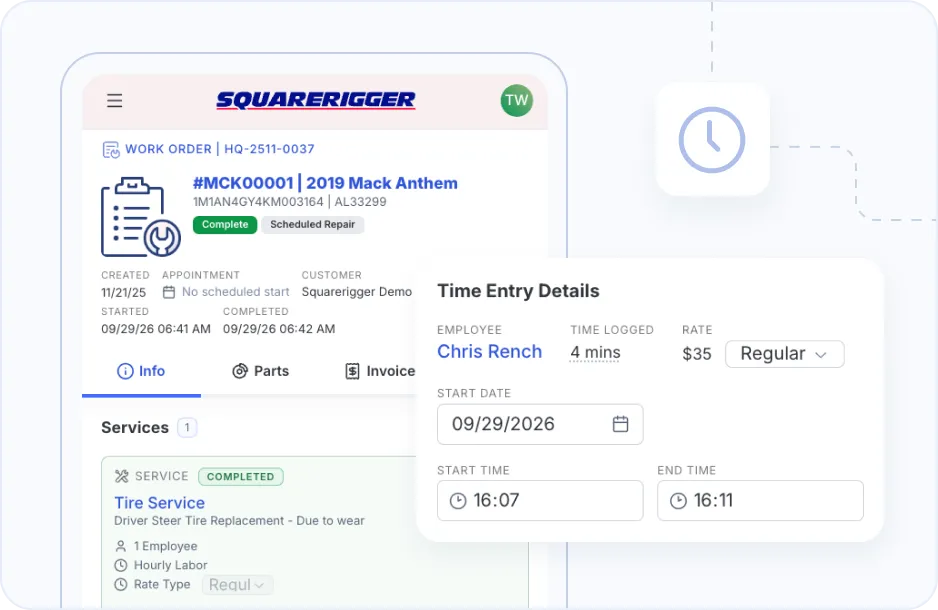
Technicians log labor, attach photos, and complete inspections from a phone. The logged time goes on the work order, so each repair record shows its true labor cost.
A new user can write a work order, and a technician can clock time on it, in the first hour. A full rollout typically takes 2 to 6 weeks, by the size of the shop.
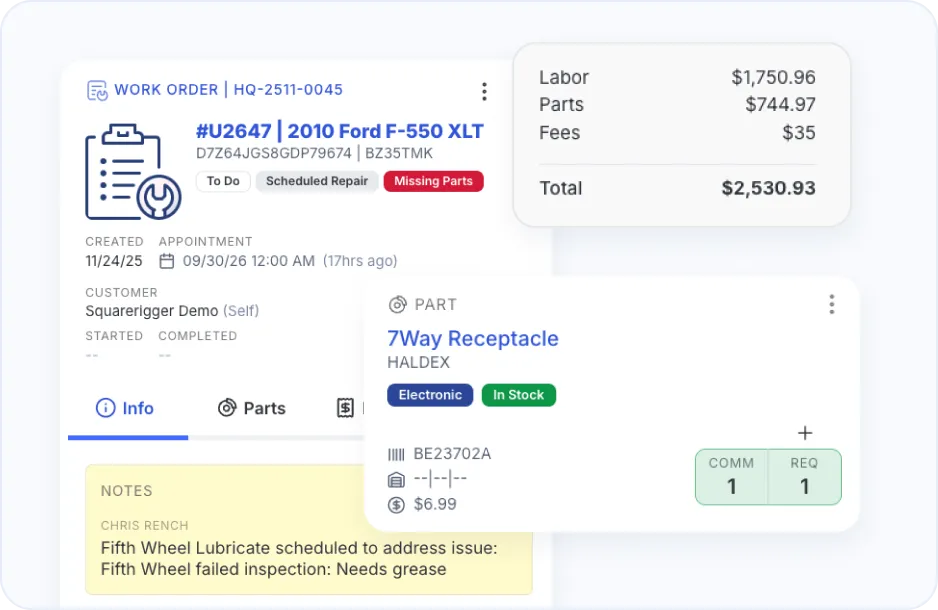
A failed inspection item makes a work request. The work order holds the asset history, the labor, the parts, and a VMRS code. The cost stays on the repair record.
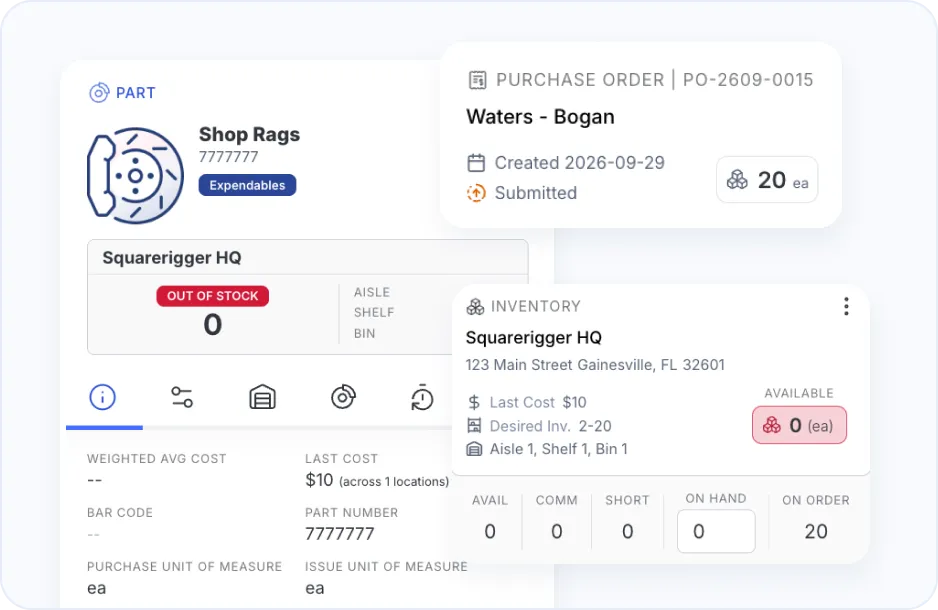
Squarerigger scans UPC barcodes and records bin locations, vendor prices, and the last price paid. Minimum and maximum levels tell the staff when to order again.
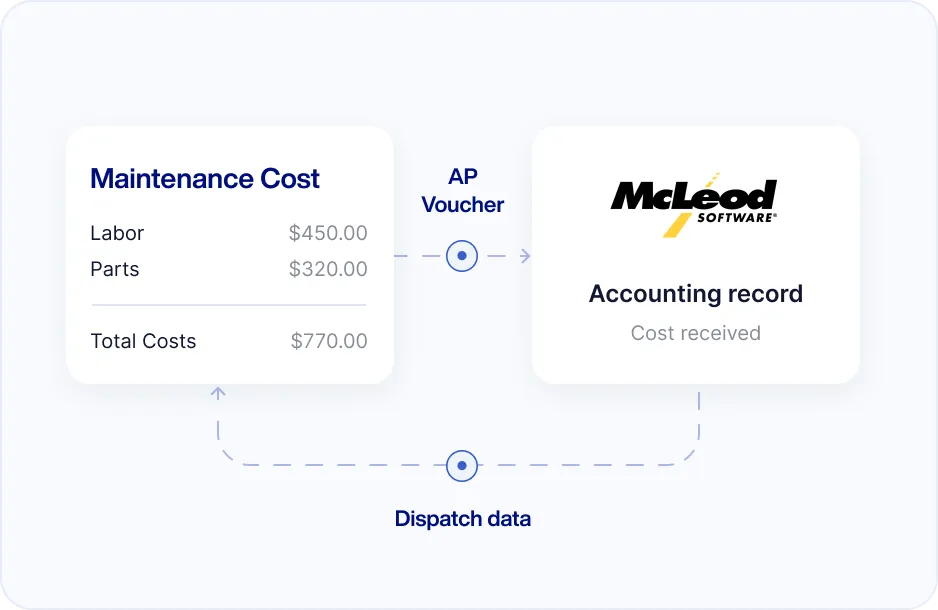
Squarerigger sends work order and parts costs to accounting. McLeod receives AP vouchers, AR billing, and settlement deductions, and it sends back dispatch data.
A failed inspection item makes a work request. The work order holds the asset history, the labor, the parts, and a VMRS code. The cost stays on the repair record.
Technicians log labor, attach photos, and complete inspections from a phone. The logged time goes on the work order, so each repair record shows its true labor cost.
Squarerigger scans UPC barcodes and records bin locations, vendor prices, and the last price paid. Minimum and maximum levels tell the staff when to order again.
A new user can write a work order, and a technician can clock time on it, in the first hour. A full rollout typically takes 2 to 6 weeks, by the size of the shop.
Squarerigger sends work order and parts costs to accounting. McLeod receives AP vouchers, AR billing, and settlement deductions, and it sends back dispatch data.
Both systems include inspections, work orders, preventive maintenance, and parts. The
systems differ in where the shop work sits and where the costs go.
| Capability |
|
|
|---|---|---|
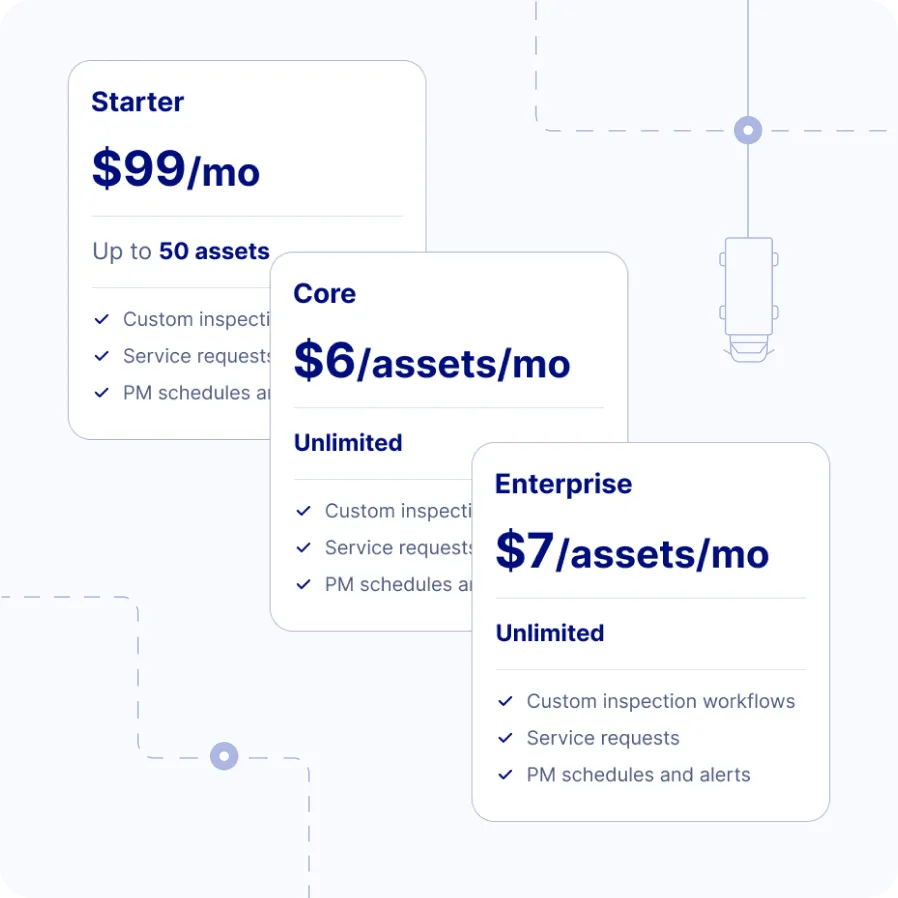
| Starting price | $10 for each asset each month for the Pro maintenance plan, from a 2023 help article. Shop Ops is an add-on. | Starter is $99 each month for up to 50 assets. Core is $6 and Enterprise is $7 for each asset each month. Billed annually. |
| Work orders | Work orders from defects, for in-house or outside mechanics, on the Pro plan | Work orders from PM schedules, inspections, breakdowns, or requests, with labor, parts, status, and audit trails in real time |
| Preventive maintenance | Schedules on distance, engine hours, or time in service. | PM plans from VIN decoding and MOTOR data, with triggers on date, meter, mileage, or OEM data. |
| Inspections | Paperless inspections and DVIRs, with Slack and Microsoft Teams integrations. | Mobile pre-trip, post-trip, and custom inspections that make work requests. |
| Parts and purchasing | Parts inventory, low-stock alerts, and parts taken off stock on work orders. No purchase orders or vendor management tools. | Parts on the work order, barcode scans, bin locations, last price paid, minimum and maximum levels, purchase orders, and obsolete-parts recovery. |
| Shop operations | Clock in and out, a scheduler, approval rules, quotes, and invoices in the Shop Ops add-on. | Technician time, labor estimates, schedules across locations, shared inventory, and work requests from drivers. |
| Outside work and vendors | Vendors and third-party contacts on a defect or a work order | Outside work orders on the asset history, with invoices, vendor costs, and approvals |
| Reporting and AI | Reporting & analytics. FleetAI add-on reads invoices and receipts and runs workflow rules. | AI answers in plain language from live data, Smart Scan invoice import, and VMRS codes for a consistent cost history |
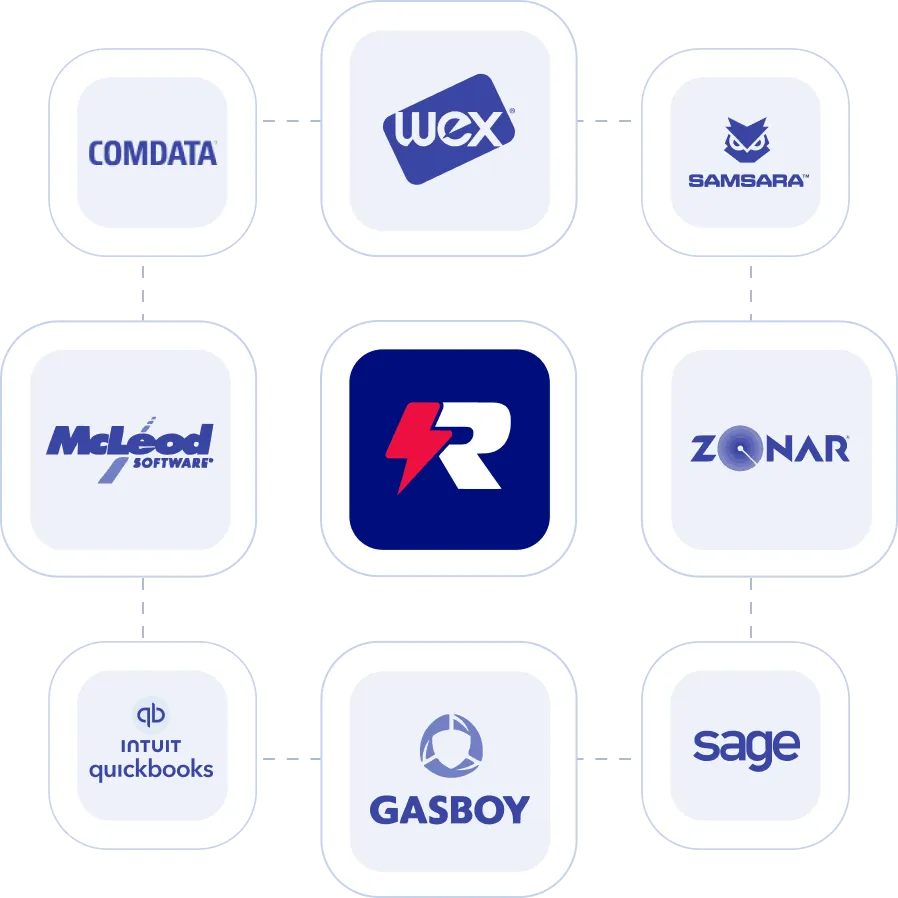
| Integrations | 25+ telematics platforms. Certified Geotab integration. Two fuel cards. Slack and Teams. | More than 70 telematics providers. McLeod uses a two-way connection. |
This table shows what each company published in September 2026.
The records to keep are the inspection history, the open defects, and the
service history that your team holds in Whip Around today.
Squarerigger connects to more than 70 platforms, from telematics such as Samsara, Omnitracs, and Zonar to TMS and accounting systems. Whip Around connects to more than 25 telematics platforms. Squarerigger also sends maintenance costs to accounting and to McLeod.
Starter is a flat $99 each month for fleets with up to 50 assets. Core and Enterprise charge for each asset, and the rate drops as the fleet grows. The rates are public, and Squarerigger does not force a multi-year contract.
Freight lines, universities, and county DOTs run their shops on Squarerigger.
Here is what their teams say about the daily work it handles.
Southwest Freight Lines
"We've been using Squarerigger for 17 years, and it has always been reliable… Squarerigger is very robust, stable, and never fails."
UC Santa Cruz
"Things used to get lost in our operation, but now everything is open, and everyone can see what's going on."
El Dorado County DOT
"Mechanics entering their own information saves us an entire person just pounding a keyboard all day."

Cherokee Freight Lines
"My people couldn't have been more impressed. It's all the things my people have wanted and been waiting for all these years."
Whip Around is one of several fleet maintenance systems. The systems below are other
options, and each one has a strength of its own.
PUBLIC SECTOR
RTA Fleet360 publishes three plans at $6, $8, and $11 for each asset each month. It serves more than 750 public sector fleets and sells through Sourcewell contracts.
Squarerigger vs. RTA Fleet360
Outside Repairs
Fleetio connects you to more than 65,000 outside repair shops, with automatic approvals and electronic invoices. Fleetio publishes a rate of $4 to $10 for each vehicle.
Squarerigger vs. Fleetio

Warranty
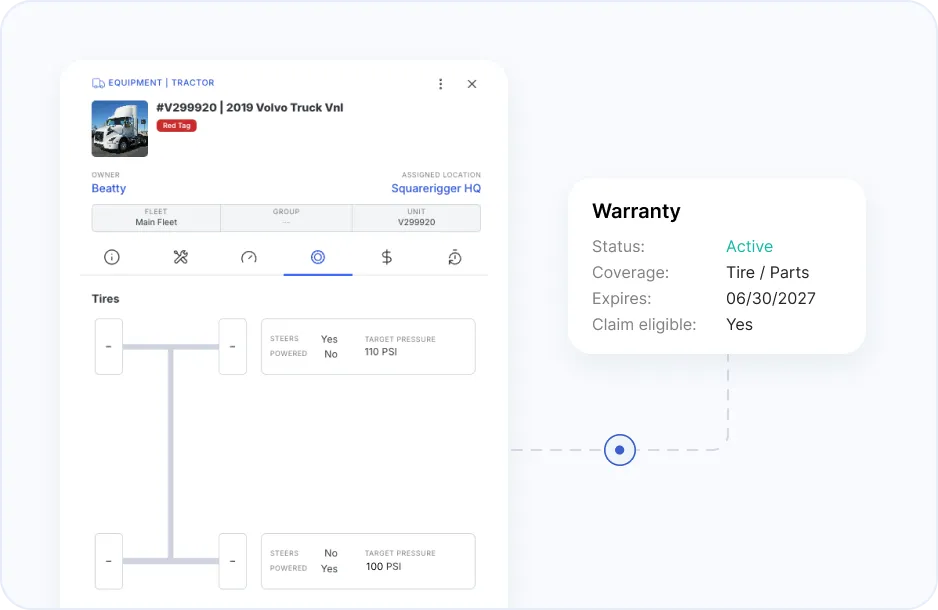
Cetaris finds warranty claims from the work order and reports on missed claims. Cetaris also manages facilities and fixed assets with its EAM and CMMS products.
Squarerigger vs. Cetaris
Dashboards
Dossier, now AMCS Fleet Maintenance, offers dashboards that each user can configure and spreadsheet-like grids with saved views. A Geotab telematics bundle is on offer.
Squarerigger vs. Dossier

Full Suite
AssetWorks sells FleetFocus in one suite with its own fuel systems, GPS, ELD, and motor pool tools. It also adds more than 200 standard reports and an analytics option.
Squarerigger vs. AssetWorks
A DVIR is a driver vehicle inspection report. A driver completes it before or after a trip and records each defect. Maintenance then repairs the defect and signs off.
A Whip Around help article from October 2023 lists a free Basic plan for one asset. It lists Standard at $5 and Pro at $10 for each asset each month.
Starter is $99 each month for up to 50 assets. Core is $6 and Enterprise is $7 for each asset each month. You pay these rates annually, and the Core and Enterprise rates drop as the fleet grows.
Yes. The Starter plan covers up to 50 assets for a flat $99 each month. A free trial is available for fleets with up to 25 assets, and a new user can write a work order in the first hour.
Yes. Drivers complete pre-trip, post-trip, and custom inspections on a mobile device. Each failed item makes a work request, and the inspection record has a time stamp.
No. Squarerigger connects to more than 70 telematics providers. It uses their odometer readings, engine hours, and fault codes to start PMs and work orders.